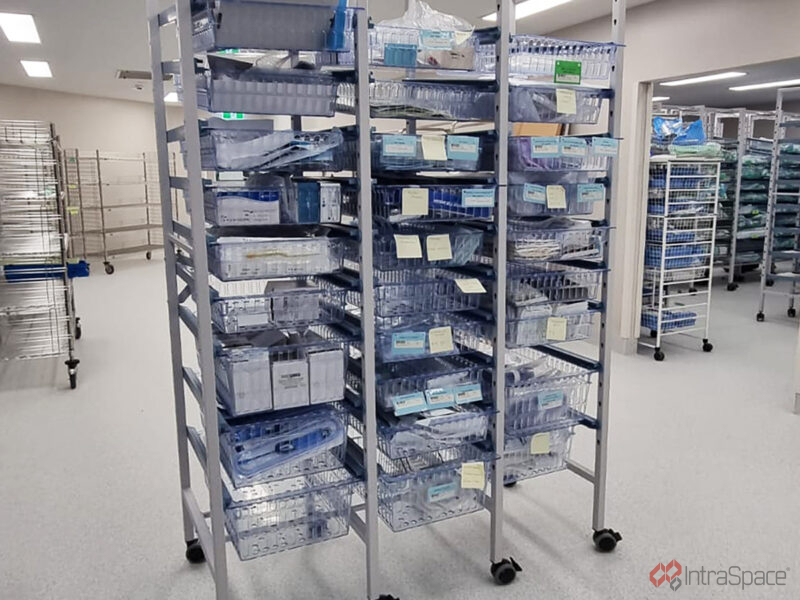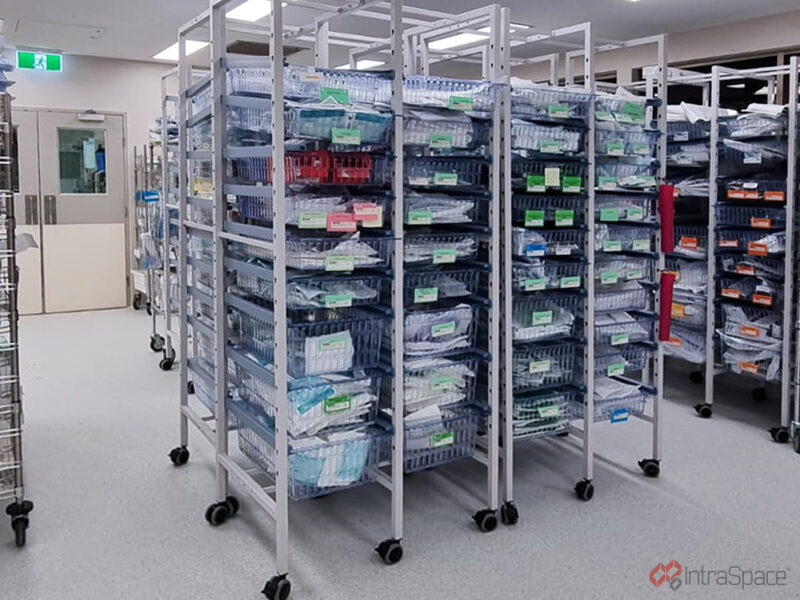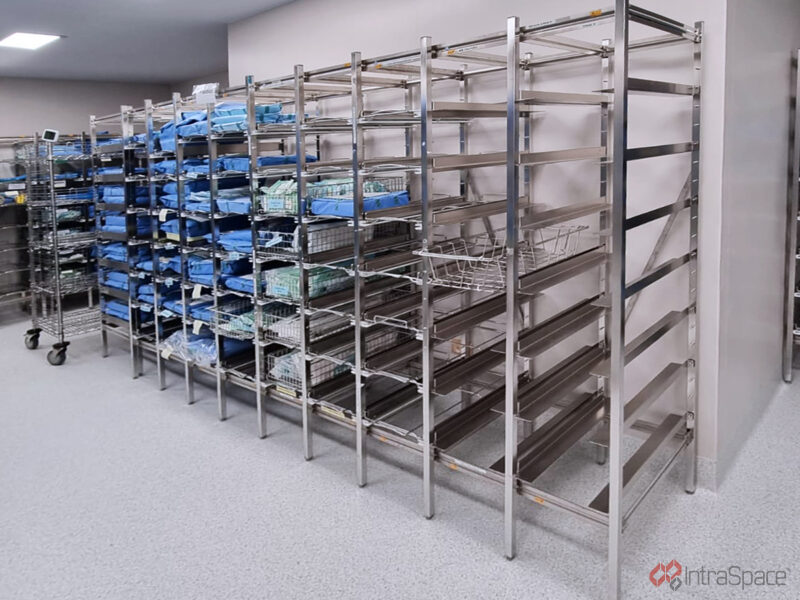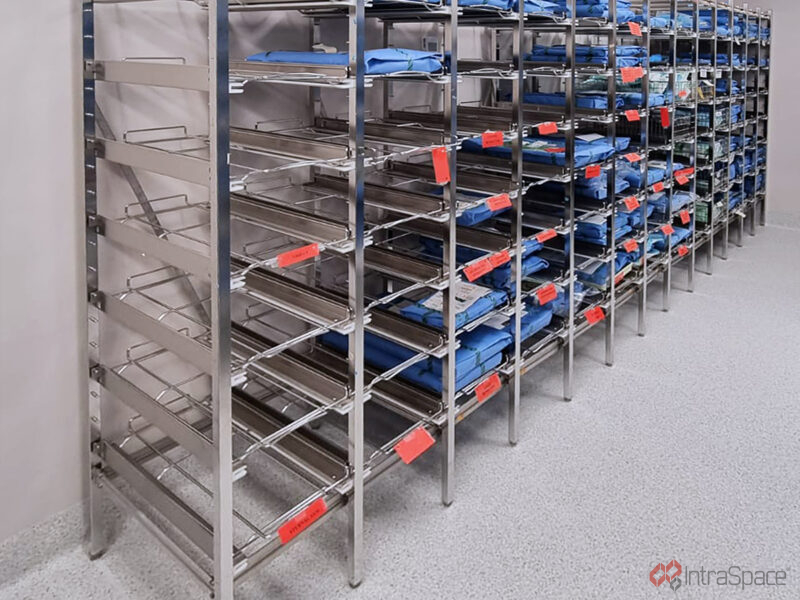





Wire Shelving and Wire Baskets at Knox Private Hospital
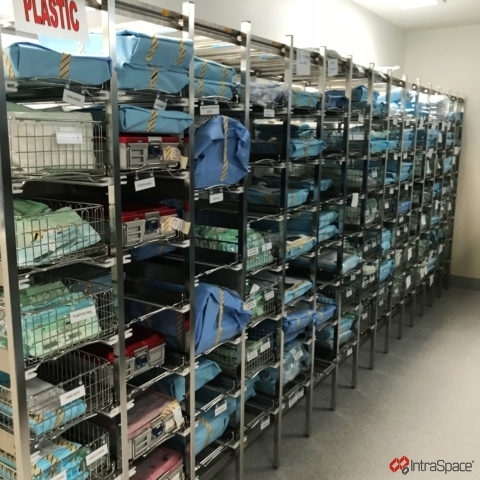
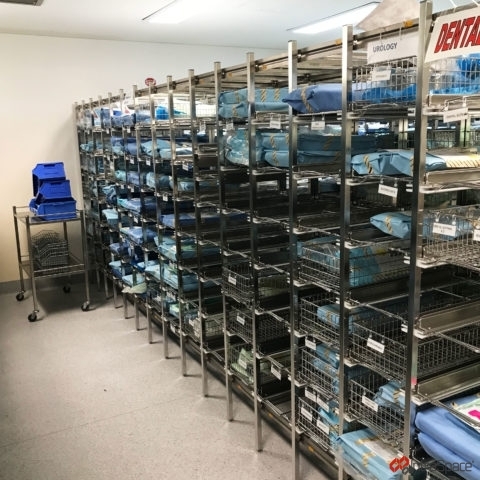
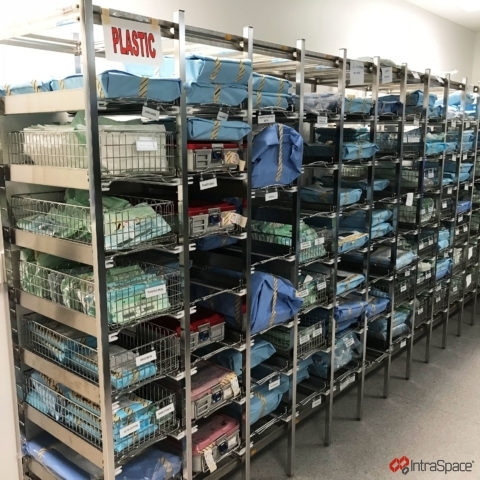
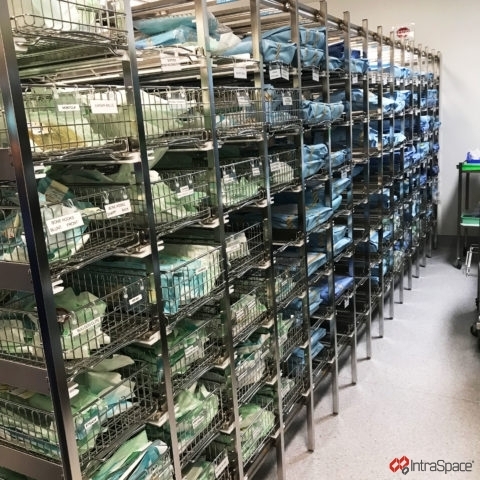
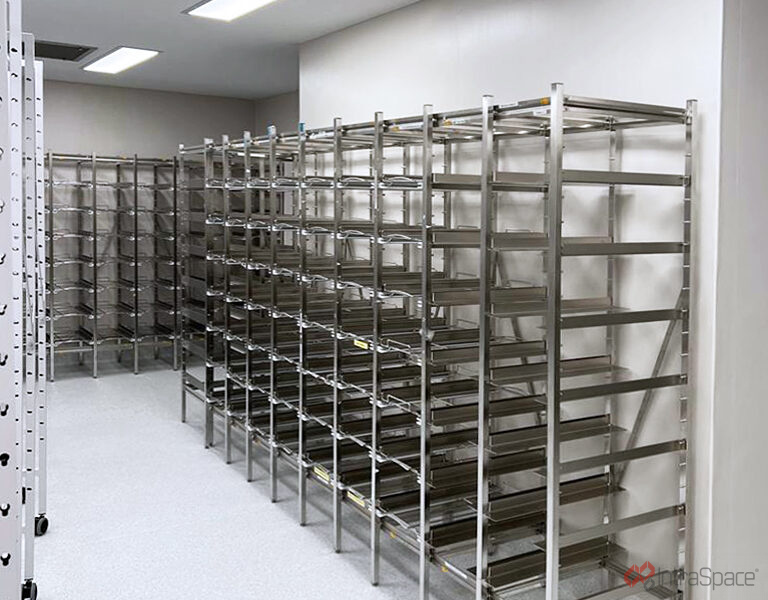
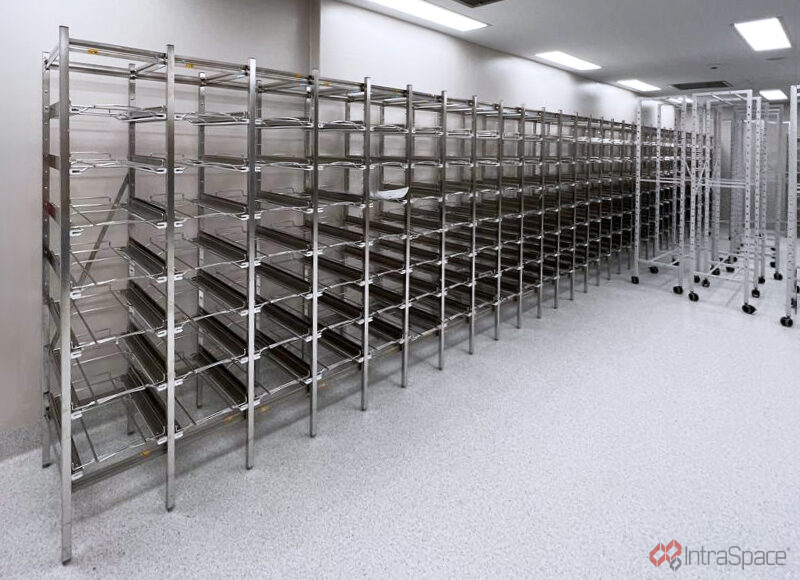
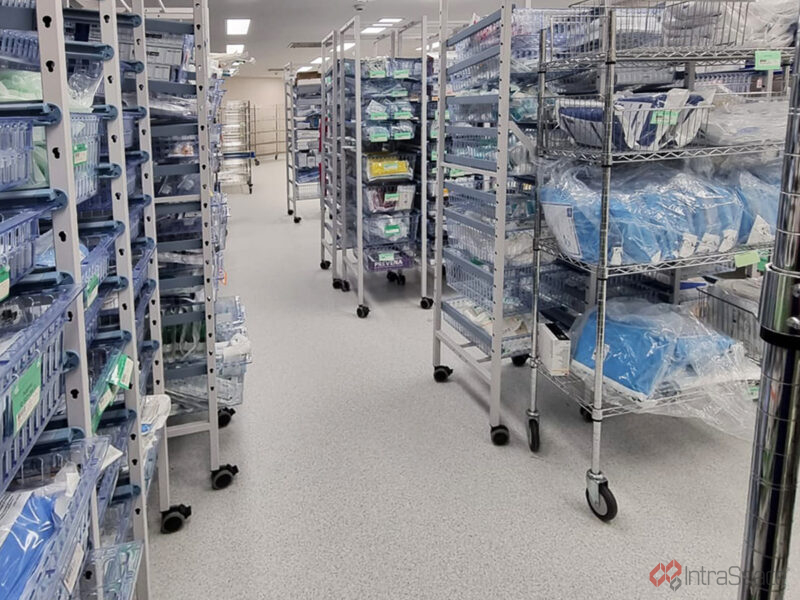
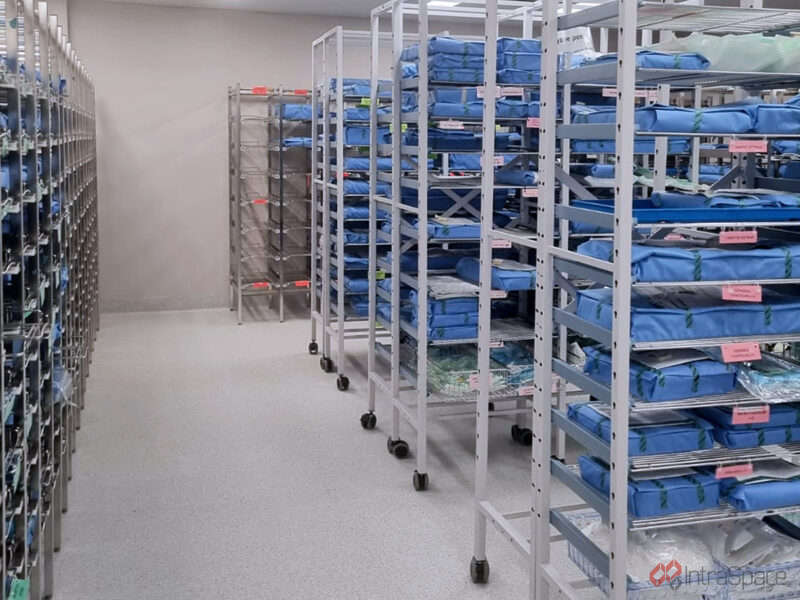
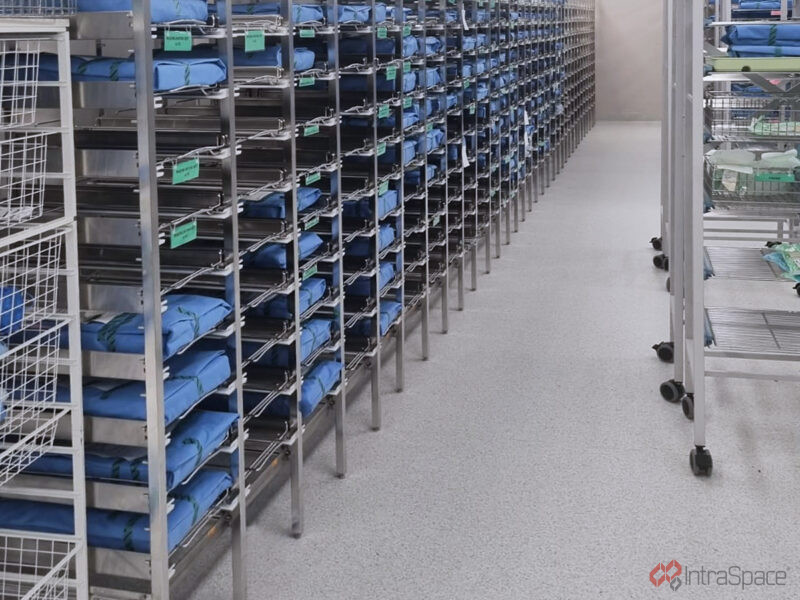
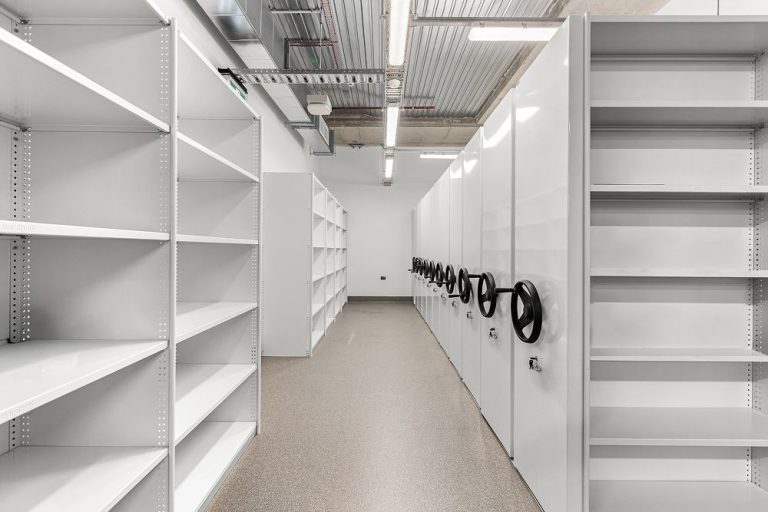
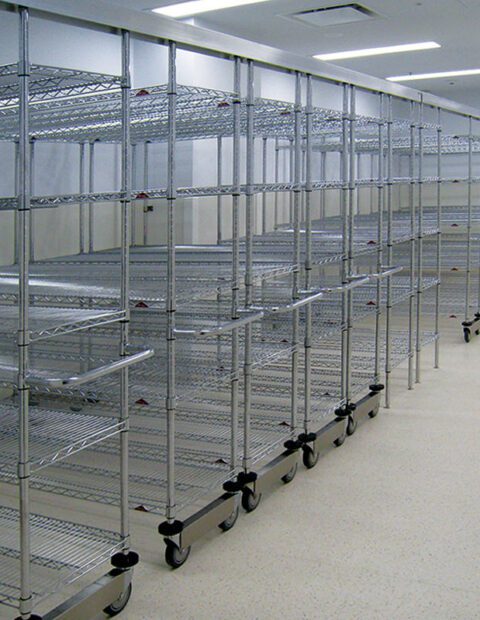
The main sterile instrument tray storage room had 2 x Overhead Track Wire Shelving with 1800mm wide shelves. These were overloaded, and had caused OH& S / WorkCover claims, as staff when in a rush would enter the room and then try to move 3 or 4 mobile bays at one time.
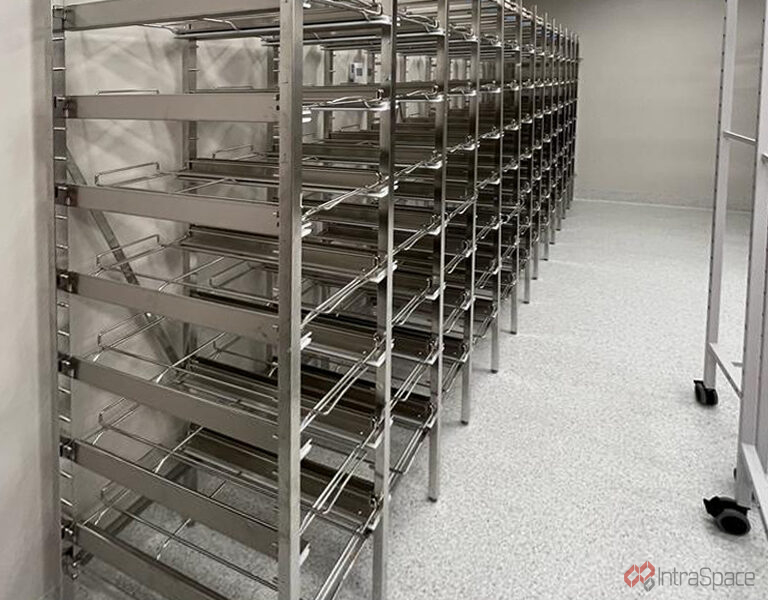
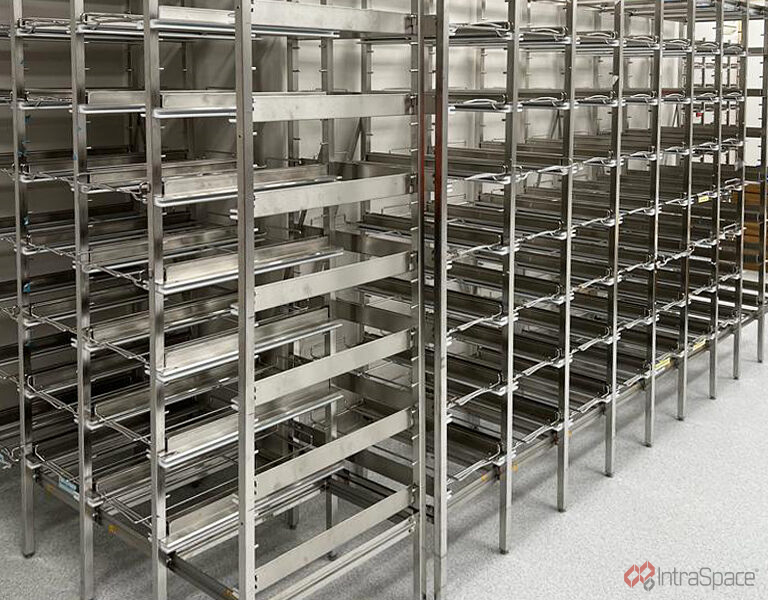
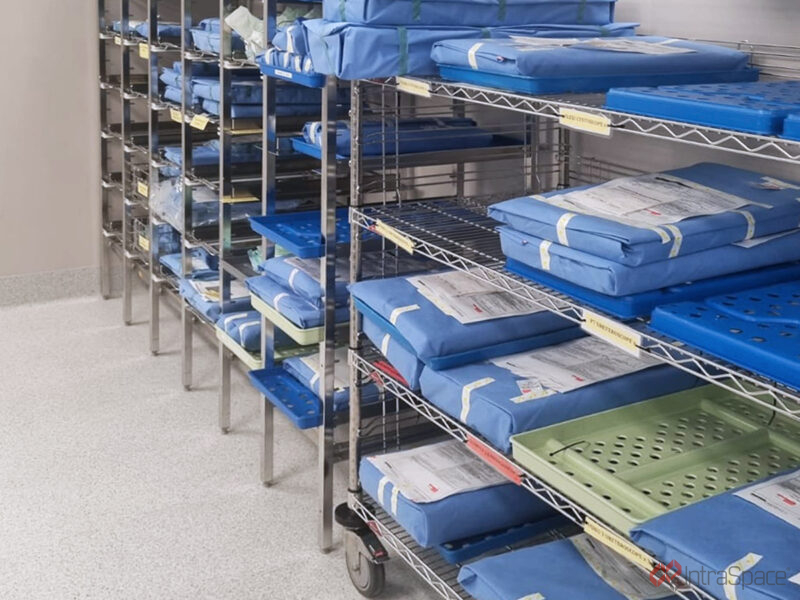
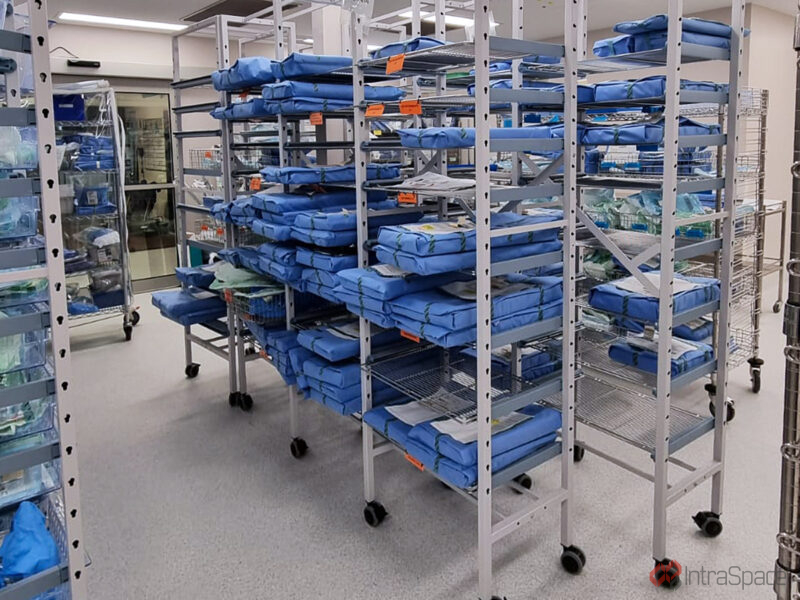
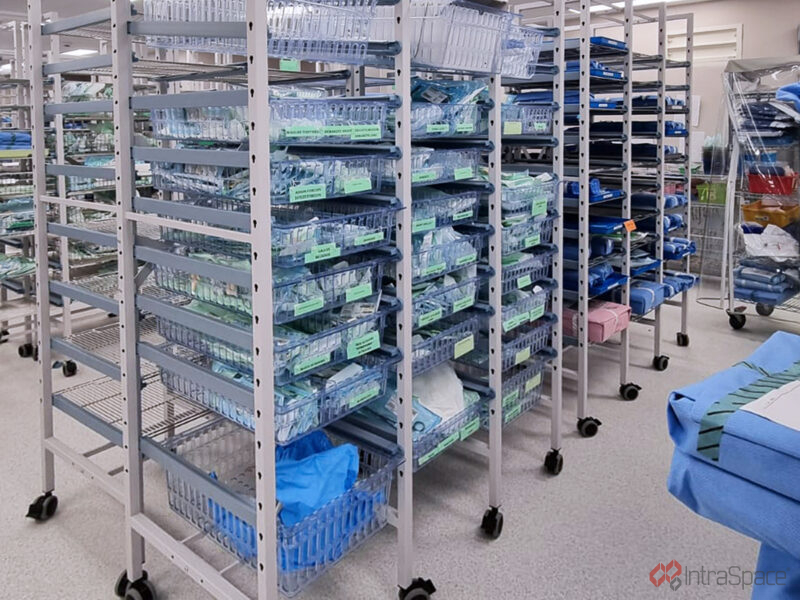
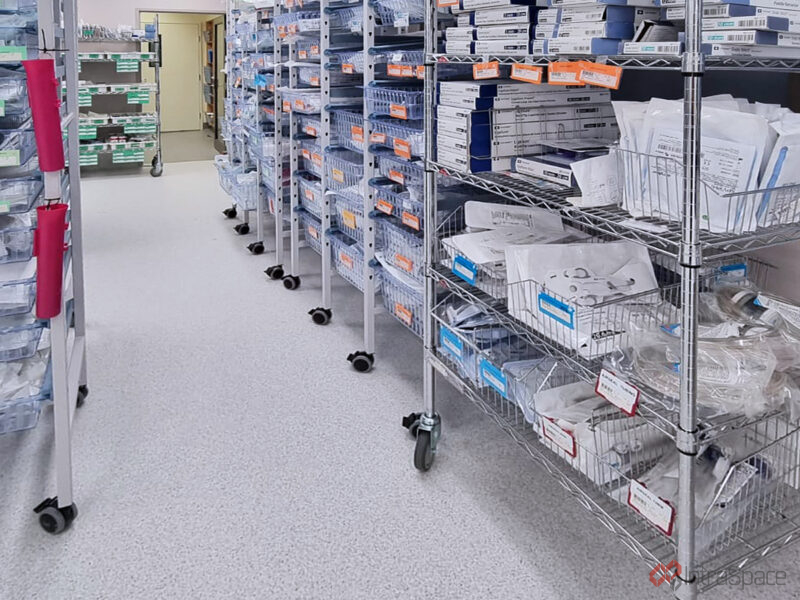
IntraSpace was involved in the dismantling and removal of the old system and installing the new system. This all had to be done out of hours. The end result is that the room is set up in a neat and orderly manner, with 2 large access aisles & staff can easily find stock. More importantly, all WorkCover claims have been stopped and the ¾ shelves allow for safe manual handling of the trays.
Sterile Storage Made Simple: Complying with AS/NZS 4187:2014
Compliance with AS/NZS 4187:2014 is essential for health services to ensure reusable medical devices remain safe for patient use. Proper sterile storage is more than just shelves, it’s about separation, protection, and traceability. Sterile items must be stored away from contaminated or in-process devices in dry, dust-free areas, protected from moisture, sunlight, and vibration. Shelving should be non-corrosive, allow airflow, and keep items off the floor with enough space to prevent cross-contamination.
Packaging, labelling, and traceability are key requirements under AS/NZS 4187:2014, and these were applied by IntraSpace when doing the fit-out at Knox Private Hospital. All devices must be intact, clearly marked with expiry dates, and tracked throughout their reprocessing cycle. Stock should follow a first-in, first-out rotation, and handling should be minimised, with clean gloves recommended. Transporting sterile items in closed or covered containers prevents contamination during movement.
Environmental control matters. Temperature and humidity must be monitored, and all surfaces (including shelves, walls, and floors) should be smooth, non-porous, and easy to clean. Routine inspections keep the storage areas safe and compliant. Staff training is critical: everyone handling sterile devices must know how to maintain separation, rotate stock, and handle items correctly.
Ultimately, AS/NZS 4187:2014 compliance ensures a controlled, organised, and traceable storage system. By following these standards, health services protect patient safety from reprocessing to point of use while meeting national requirements for infection prevention.
For the full Case Study, click here.