




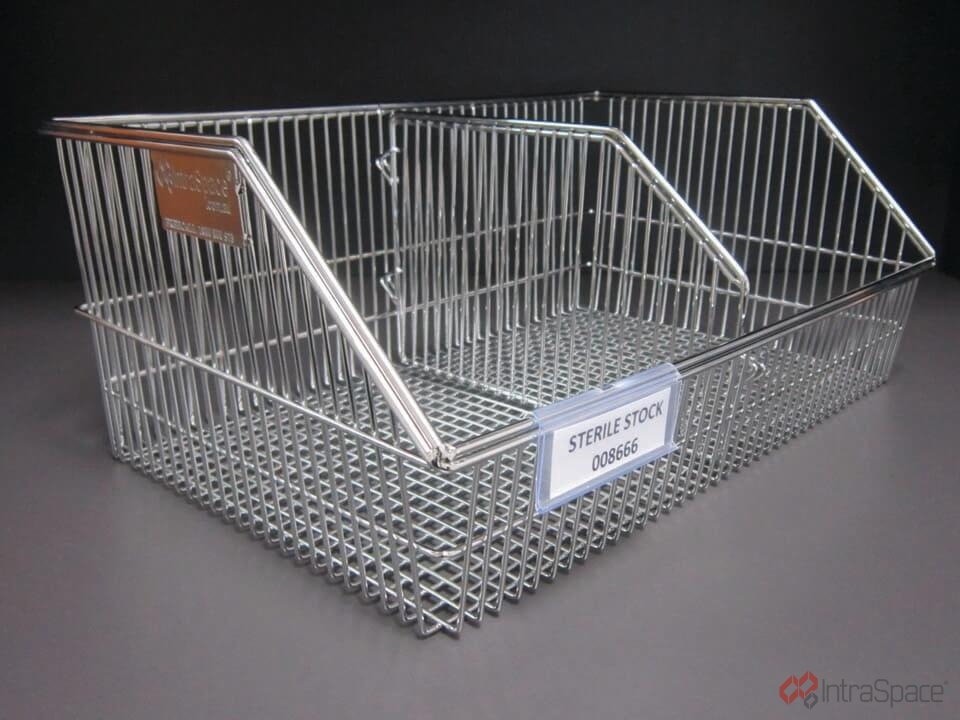
Baskets that have large mesh holes may appear cheaper to purchase but when the stock falls through the gaps you lose stock and stock is money.
Better to invest in a good quality basket with tight mesh and buy it once. We find hospitals often come to us to replace baskets that have too big a mesh.
Facilities that still utilize solid based plastic tubs have a large staff cost to clean these daily and record it vs having a good wire basket that meets AS5369 standards that allow for all your airflow and don’t accumulate dust.
Choosing the correct wire basket and load capacity is critical in medical environments where safety, hygiene, and efficiency cannot be compromised. From treatment rooms and wards to storage areas and supply corridors, medical wire baskets play a quiet but essential role in supporting daily clinical workflows and meeting compliance obligations.
This guide explains how to select medical wire baskets that suit different medical supplies, meet safety expectations, and integrate seamlessly into Australian healthcare storage systems through informed, early planning.
Why Basket Mesh Size Matters in Medical Settings
Having a good storage system directly affects how well medical supplies are stored, accessed, and replenished.
Baskets that are not setup with dividers encourage overcrowding, increasing handling time and contamination risk. Oversized baskets waste shelf space and reduce storage density. Correct sizing also supports staff workflow. When items are clearly visible and easy to reach, clinical staff spend less time searching and restocking.
Open basket layouts improve visual identification, reduce picking errors, and support faster audits. In high-pressure environments, appropriately sized healthcare storage baskets contribute to safer movement, smoother processes, and more consistent day-to-day operations. They also help planners standardise storage layouts across wards and treatment rooms without frequent reconfiguration, supporting training consistency and predictable stocking routines for busy teams everywhere.
Understanding Load Capacity for Medical Wire Baskets
Load capacity impacts staff safety, system reliability, and compliance. A wire basket that’s overloaded or incorrectly used can become a point of failure within an otherwise well-designed storage system. Unlike low-traffic environments, medical storage is accessed constantly, often under time pressure, making correct load management essential.
What Load Capacity Actually Means
Load capacity refers to the maximum weight a wire basket can safely support during normal use. This rating assumes that weight is evenly distributed across the base of the basket, rather than concentrated in one static area. Concentrated point loads, such as stacking heavy items in one section, place additional stress on fixings and shelf supports, reducing overall stability and lifespan.
Why Healthcare Requires Higher Safety Margins
Medical environments place greater demands on storage systems than many other settings. Frequent restocking, movement of supplies, and multiple users increase wear over time. Understanding wire basket load capacity allows facilities to build in appropriate safety margins that account for daily use, rather than relying on theoretical maximums that may not reflect real-world conditions.
Risks of Exceeding Load Ratings
Exceeding recommended load limits introduces avoidable safety and compliance risks that may go unnoticed until failure occurs.
- Structural Deformation and Failure: Overloading can cause shelves and baskets to bend or fail over time, compromising system stability and lifespan.
- Increased Risk of Staff Injury: Weakened storage systems increase the likelihood of sudden failures, putting staff at risk during routine access and restocking.
- Compliance and Audit Issues: Storage systems that exceed documented medical storage load ratings may fail inspections and create compliance concerns during audits.
- Preventable Operational Risk: These risks can be avoided through correct basket selection, clear load guidance, and consistent application across departments.
Material, Design, and Hygiene Considerations
When it comes to medical storage, it is not just about what you store, but how the storage itself performs day after day. In busy healthcare environments, wire basket materials and design choices have a direct impact on hygiene, durability, and ease of cleaning. Selecting the right construction helps support infection control protocols, withstand constant use, and reduce long-term maintenance demands across clinical and support areas. Here’s what to consider:
- Open Wire Design for Hygiene Open wire construction promotes airflow, reduces dust and moisture build-up, and allows clear visual inspection during cleaning. This reduces contamination risk and supports effective routine cleaning practices.
- Finish Selection for Healthcare Use We stock chrome or stainless steel finish. Stainless steel options suit high-moisture areas or aggressive cleaning regimes when specified correctly.
- Compatibility with Infection Control Protocols Basket materials and finishes must align with facility infection control policies and approved cleaning agents. Smooth, non-porous surfaces support regular disinfection without degrading over time.
- Durability in High-Use Environments Medical storage baskets should withstand frequent loading, cleaning, and movement without deformation or coating damage. Durable construction supports long-term performance and predictable maintenance planning.
Matching Wire Baskets with Shelving Systems
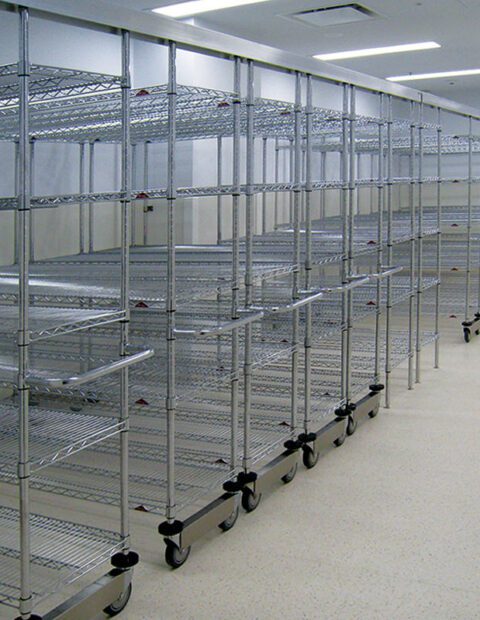
Choosing the right wire basket is only part of the equation. How that basket works with the shelving system behind it can make a big difference to safety, usability, and long-term performance. In healthcare environments, baskets and shelving need to function as a single, integrated system rather than a collection of individual components.
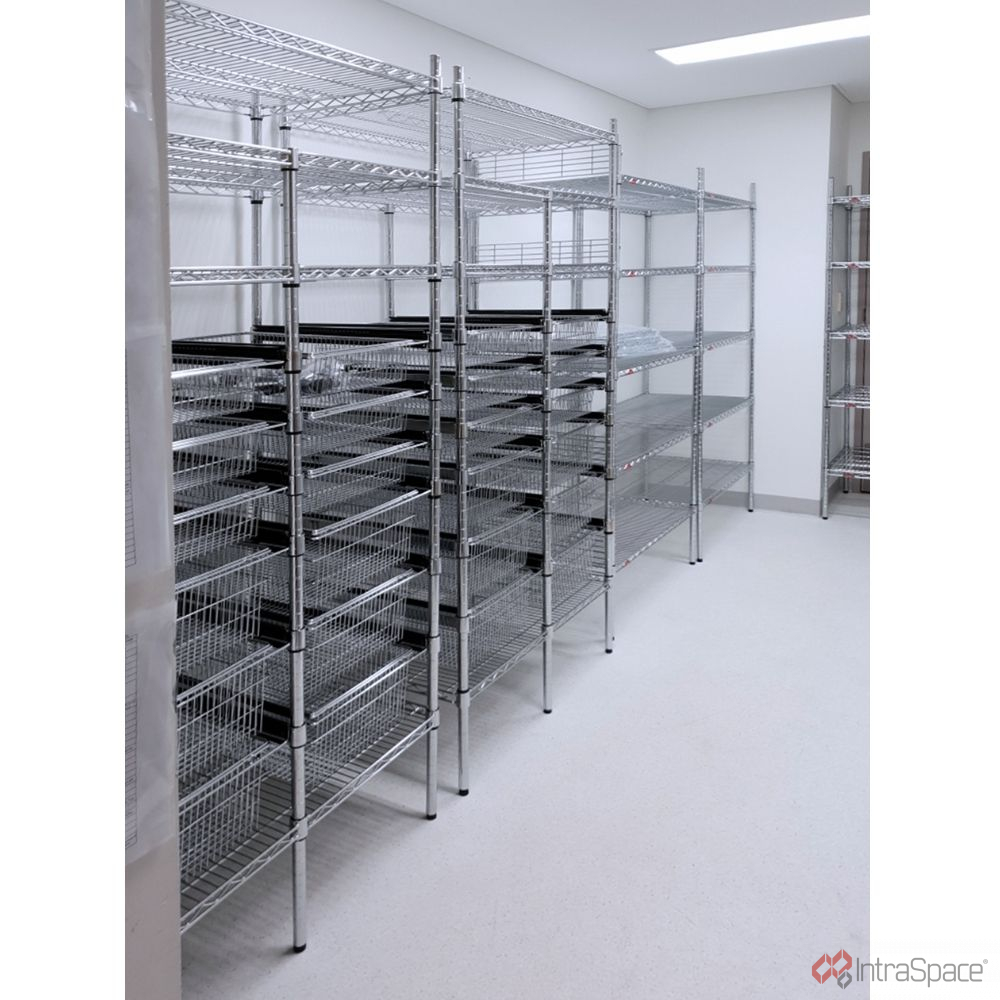
Compatibility with hospital wire basket shelving ensures baskets fit correctly, mount securely, and distribute weight evenly across the shelf structure. This reduces movement, improves stability, and helps prevent uneven loading that can lead to premature wear or failure over time.
Modular shelving systems also provide flexibility as storage needs evolve. Adjustable shelf heights allow baskets to be repositioned as inventory changes, services expand, or workflows are redesigned. This is particularly valuable in hospitals and medical centres where storage requirements rarely stay static for long.
Moreover, taking a future-focused approach can also reduce replacement costs and operational disruption. Compatibility with accessories such as dividers, labelling, and identification systems improves organisation and supports faster restocking and audits. Integrated basket and shelving systems also simplify specification for new builds and refurbishments across Australian healthcare, education, and regional facilities, helping teams plan with confidence from the outset.
Why IntraMed Wire Baskets Are Designed for Medical Environments

Medical environments place unique demands on storage systems, from infection control and safety to frequent access and long-term durability. IntraMed medical wire baskets are developed specifically to meet these day-to-day realities.
- Purpose-Built for Healthcare Settings
IntraMed baskets are designed for use in hospitals, clinics, and aged care facilities where reliability and consistency matter. Their construction supports the demands of clinical environments rather than adapting general-purpose storage for medical use. - Designed to Work Within Medical Storage Systems
These baskets are engineered to integrate seamlessly with broader medical storage and shelving systems, supporting compliant fit-outs and predictable performance across departments. - Focus on Durability and Safe Load Handling
Design emphasis is placed on structural strength and appropriate load handling to support frequent access, restocking, and movement without compromising safety over time. - Flexibility for Changing Storage Needs
They support modular layouts, allowing facilities to adapt storage as workflows evolve, services expand, or inventory requirements change. Our baskets come with divider systems internally unlike kitchen style baskets that most joiners put in to projects to save money.
For teams planning or upgrading medical storage, we’d be glad to share detailed specifications and configuration options.
CONCLUSION: Safer, More Efficient Healthcare Workflows Begin with the Right Storage
Choosing the right wire basket is not just a specification exercise. It directly affects how safely and efficiently a healthcare space operates every day. When basket size, load capacity, hygiene requirements, and system compatibility are considered together, storage systems become easier to use, safer for staff, and more resilient over time. Thoughtful, early planning helps reduce compliance risk, minimise disruption, and support evolving clinical needs.
BOOK A CONSULTATION: Get Expert Advice on Smart Storage Solutions
Speak with our experts to assess your storage needs, identify opportunities for efficiency, and explore solutions that meet compliance, infection control, and space optimisation requirements. Whether you are planning a refurbishment or a new build, we’ll ensure you make an informed decision that saves time, reduces costs, and future-proofs your storage investment.